Office Pilates Outcomes That Last Beyond Work
Office Pilates outcomes include stronger posture, sharper focus and calmer energy. See what a consistent Reformer routine can bring to your team each week.
A calendar full of meetings can leave even active people feeling physically switched off: shoulders creeping forward, hips stiffening, concentration fading by mid-afternoon. The most meaningful office Pilates outcomes address that pattern at its source. They are not about adding another item to a wellness checklist. They create a regular moment to build strength, restore alignment and return to work with more control.
For teams, Reformer Pilates offers a rare combination: training that feels focused and challenging without demanding impact, complicated equipment knowledge or a long recovery period. With consistency, it can support how people move through the workday as much as how they feel after class.
What office Pilates outcomes look like in practice
The value of workplace movement is often reduced to a quick stretch or a temporary energy boost. Those have their place, but Pilates can offer more when it is structured around resistance, precision and progression.
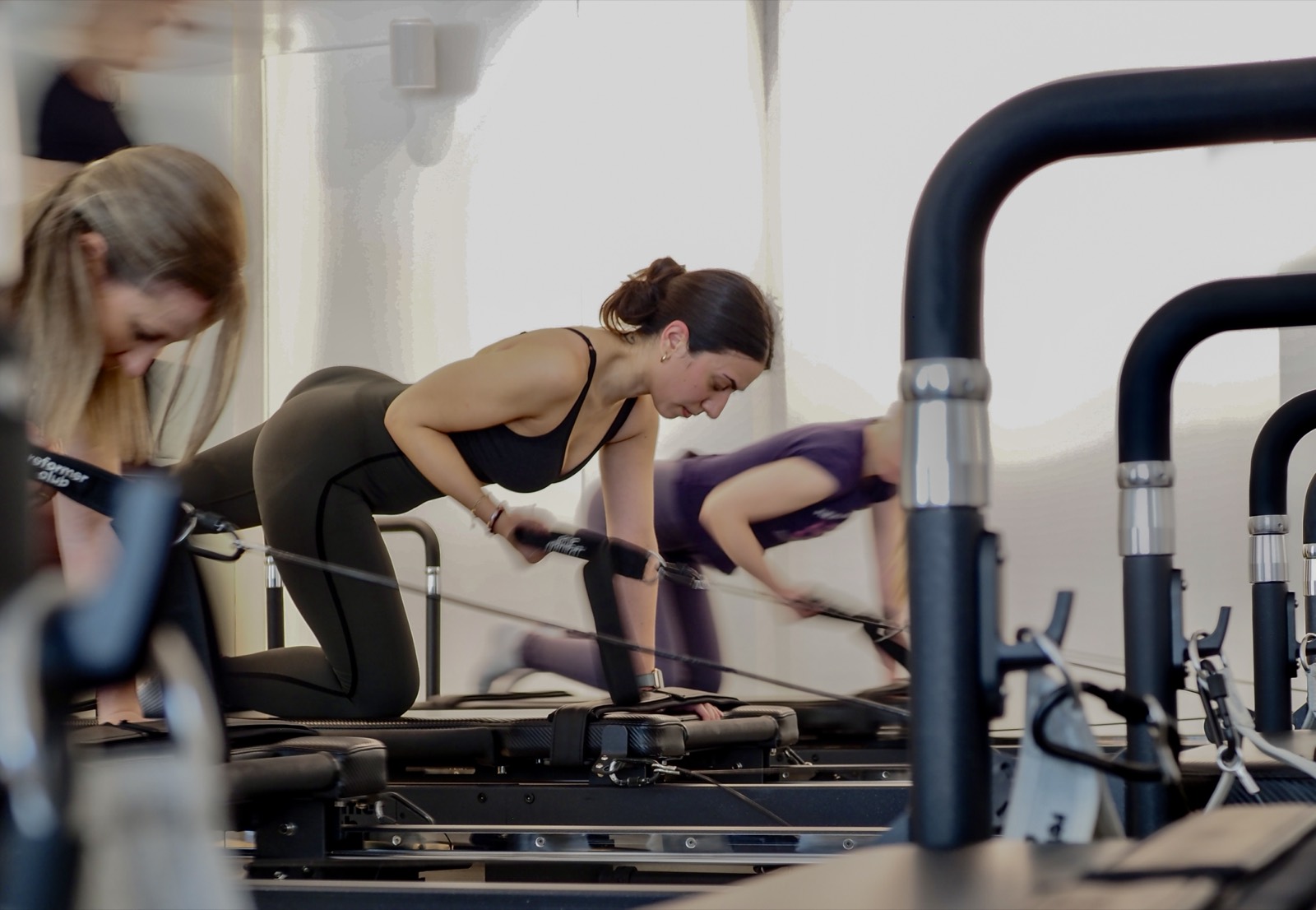
A well-led Reformer session asks the body to stabilise while it moves. Springs create resistance in both directions, so muscles must work with control rather than relying on momentum. Over time, participants begin to recognise how they stand, sit, breathe and hold tension. That awareness carries into the hours spent at a desk, in transit or on a video call.
Results vary by starting point, training frequency and individual needs. Someone returning to movement may first notice better body awareness and less stiffness. A regular gym-goer may feel challenged by the endurance required to maintain precise form. Neither outcome is more valuable. The goal is steady progress that fits real working lives.
Stronger posture without chasing a perfect pose
Good posture is not a rigid position to hold all day. It is the ability to shift, support yourself and maintain alignment without unnecessary strain. For people who spend long periods seated, that means developing strength through the back, glutes, deep core and shoulders while allowing the hips and chest to move more freely.
Reformer Pilates trains these relationships in motion. A controlled leg series can build lower-body strength and pelvic stability. Rows and pulling patterns encourage the upper back to contribute, rather than letting the neck and shoulders take over. Core work teaches the torso to stay organised while the arms or legs move.
The outcome is often subtler than a dramatic posture transformation. People may notice that they can sit through a presentation with less fidgeting, carry a laptop bag more comfortably or finish the day without the familiar sense of collapse through the chest. These changes matter because they make movement feel more available, not more restricted.
Better focus through controlled effort
Workplaces ask people to direct attention for long stretches. Pilates asks for a different, physical kind of attention: feel the spring tension, set the position, move with control, adjust when form changes. There is little room for autopilot.
That concentration can be restorative for minds that have spent hours responding to messages and switching between tasks. A session does not remove deadlines, but it can create a clear boundary in the day. For 45 or 50 minutes, the instruction is simple: breathe, move precisely, stay present.
This is why intensity does not need to mean chaos. Slow Resistance Training uses time under tension to make movements demanding while keeping them intentional. Participants leave having worked hard, but often with a calmer, more settled energy than they would get from a rushed high-impact workout.
Strength and endurance that support everyday demands
Pilates is sometimes misunderstood as gentle because it is low impact. The absence of jumping does not mean the absence of challenge. Controlled resistance can expose weak links quickly, especially when muscles must maintain alignment for longer sets.
For office teams, this kind of strength has practical relevance. It supports balance when moving quickly through a busy day, control when lifting and carrying, and endurance when the body would otherwise default to slouching or bracing. It can also complement running, cycling, strength training and other sports by developing stability and range of motion alongside muscular effort.
The trade-off is that Pilates rewards patience. Progress is built through repeat attendance and cleaner execution, not by forcing the heaviest spring or the deepest range on day one. That makes clear coaching essential, particularly in a mixed group where some participants are brand new and others train regularly.
Why a Reformer format works for workplace groups
A corporate class should feel accessible, but it should never feel vague. The Reformer gives each person adjustable resistance and direct feedback from the machine. It allows instructors to offer options without separating the room into beginners and advanced participants.
For a new client, the priority may be learning setup, breath and alignment. For someone more experienced, the same movement can become harder through spring choice, tempo, range or unilateral work. This flexibility makes the format suitable for diverse teams, including people who may not normally choose the same fitness class.
The best environment also removes performance pressure. People do not need to arrive already fit, flexible or familiar with Pilates language. They need thoughtful guidance and permission to work at an appropriate level. Come as you are applies especially well in a workplace setting, where colleagues may have very different relationships with exercise.
At Reformer Club, the progression from START to SIGNATURE and BURN gives participants a clear path rather than a one-size-fits-all experience. That matters for long-term engagement. When people can see where they are beginning and how they can develop, consistency becomes more realistic.
How to create outcomes that extend beyond one session
A single class can change the tone of an afternoon. Sustainable change comes from the conditions around it. Employers and team leads should treat Pilates as a recurring practice, not a one-off reward during a particularly stressful month.
Frequency matters, but so does reliability. A weekly session at a predictable time is more likely to become part of a routine than an occasional event that clashes with meetings. For some teams, a lunchtime format creates a useful reset. For others, an early evening session makes more sense. The right choice depends on schedules, commute patterns and whether people can genuinely protect that time.
It also helps to set the expectation that the class is training, not entertainment. The experience can be enjoyable and social, but the outcomes come from attention to form and a willingness to meet controlled resistance. Encourage participants to arrive a few minutes early, wear clothing they can move in and allow themselves to step away from notifications.
Leaders have a role here too. If managers visibly respect the session time and participate when appropriate, the message is clear: wellbeing is not something employees should squeeze into an already overloaded day. It is part of building a more sustainable way of working.
Measuring progress beyond attendance
Attendance is useful, but it tells only part of the story. Better measures are the changes people can describe in their own experience. Are they less stiff after long meetings? Do they feel more stable in training outside the studio? Is their energy less erratic by the end of the day? Are they more aware of when stress is showing up physically?
For organisations, success can also look like stronger connection. A shared class gives colleagues a setting outside their usual roles, without requiring forced socialising. People support one another through challenging sequences, then return to work with a small but genuine common experience.
Avoid promising a universal result on a fixed timeline. Pilates is not a cure for every ache, and it does not replace medical advice or individual rehabilitation where that is needed. Its strength is in providing a consistent, intelligent movement practice that meets people where they are and gives them room to improve.
The most useful next step is simple: choose a regular time, begin at the right level and give the practice enough weeks to become familiar. When movement becomes a protected part of the work rhythm, stronger, more focused and more balanced can become more than a feeling that lasts until the next meeting.