Pilates Stress Relief With Better Control
Pilates stress relief starts with controlled movement. Learn how Reformer training supports focus, strength, breathing and a steadier rhythm each week.
A stressful week rarely lives only in the mind. It shows up in raised shoulders, a tight jaw, shallow breathing and the sense that even your downtime is rushed. Pilates stress relief is not about switching off or avoiding challenge. It is about using precise, controlled movement to give your attention a clear place to go - and leaving with a body that feels worked, steadier and more connected.
For busy professionals, stress management needs to fit real life. A useful session should challenge the muscles without draining the nervous system further, offer enough structure to quiet mental noise, and leave you more capable for the rest of your day. That is where Reformer Pilates has a distinct advantage.
Why controlled movement changes the feeling of a workout
When life feels full, high-intensity exercise can be either helpful or too much. Some people genuinely feel better after a fast, sweaty session. Others finish feeling overstimulated, depleted or unable to settle afterwards. The right choice depends on your energy, sleep, workload and training history.
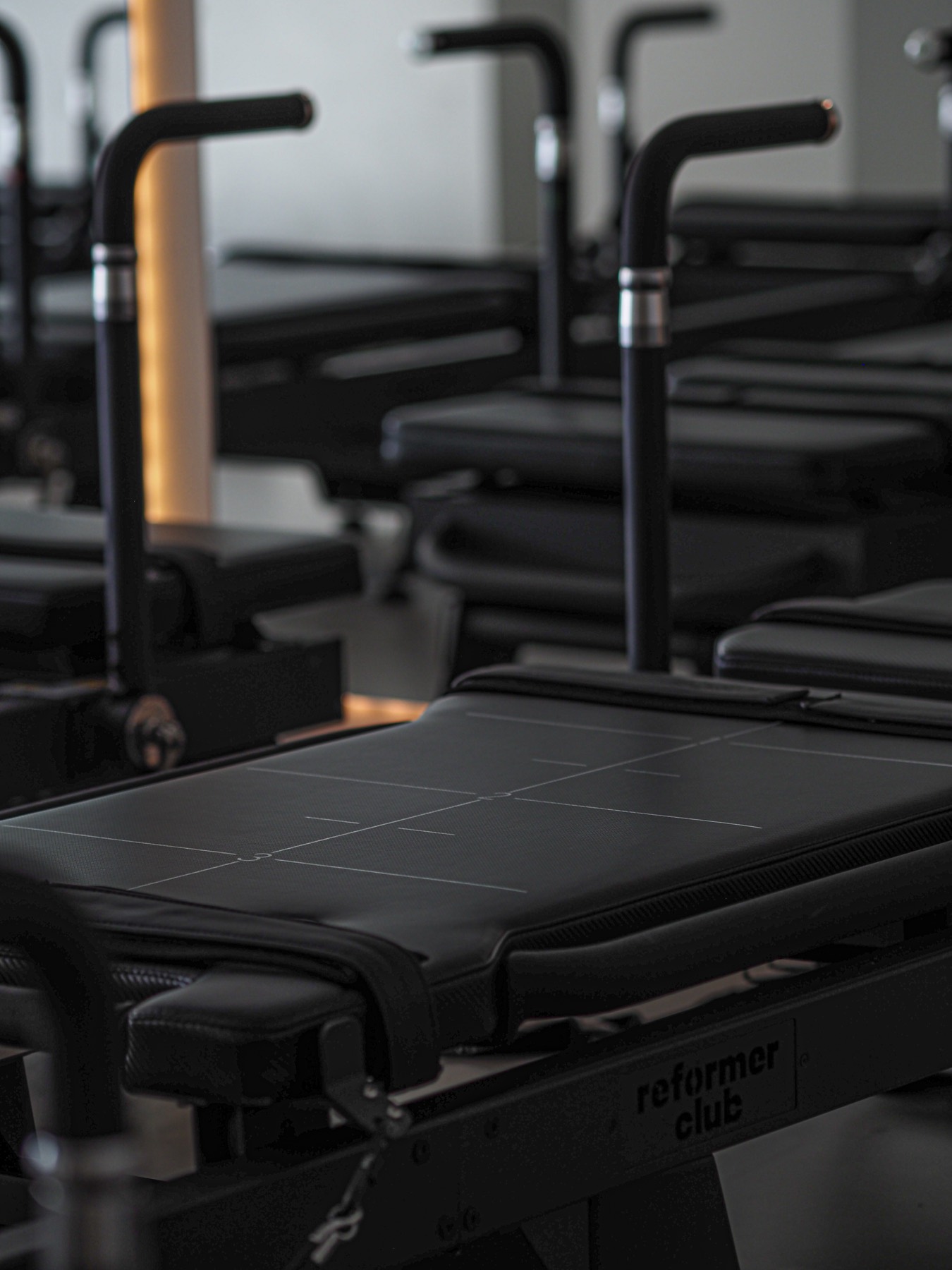
Reformer Pilates offers a different kind of intensity. Instead of chasing speed, you work with resistance, alignment and time under tension. Your attention stays with the movement: the position of the pelvis, the stability of the ribs, the pressure through the feet, the quality of each repetition. There is little room for scrolling mentally through tomorrow's meetings when you are concentrating on form.
This focus is not accidental. Controlled movement creates a practical break from constant decision-making. For 50 minutes, the instruction is clear and the task is physical: move with precision, maintain tension, breathe, reset. The result can feel deeply grounding, even when the workout is demanding.
Pilates stress relief is built through attention
Stress often pulls attention into the future. You anticipate, plan and react before anything has happened. Pilates brings attention back to immediate feedback from your body. The springs respond to how you move. Your core either supports the exercise or asks you to adjust. A small shift in posture can make the movement more stable, more efficient and more challenging.
That feedback loop matters. It encourages presence without asking you to sit still and force your mind to be quiet. For many people, especially those who spend their day at a desk or moving between responsibilities, focused physical work is a more accessible route into calm than passive rest.
Breathing supports this process. In a well-taught Reformer class, breath is not a performance tool or something to get perfect. It is a cue to avoid holding unnecessary tension. A full exhale can help you reconnect to the deep abdominal muscles. A deliberate inhale can create space through the ribcage. Over time, this rhythm can make you more aware of the moments when stress has pulled your breath high into the chest.
Resistance gives restless energy somewhere to go
Stress can leave the body feeling both tired and wired. You may lack the energy for a long workout, yet struggle to sit still. Slow Resistance Training offers a useful middle ground.
By moving deliberately against spring resistance, muscles work hard without impact. The pace is controlled, but the effort is real. You may feel your legs shake in a lunge, your obliques switch on during a plank variation, or your upper back work to hold a stronger posture. This is not a gentle escape from training. It is intelligent training that asks for endurance and control.
That muscular effort can be particularly satisfying after a screen-heavy day. It gives the body a clear signal that it has moved, loaded and completed a task. Rather than carrying restless energy from one tab, train or conversation to the next, you direct it into a sequence with a beginning, middle and finish.
The low-impact format is equally valuable. Reformer Pilates reduces the repeated pounding associated with some fitness formats, while still building strength and endurance. For people managing busy schedules, it can be easier to return consistently when training feels challenging without being punishing.
The posture-stress connection is more practical than it sounds
Poor posture is not simply an aesthetic issue, and stress is not caused by rounded shoulders alone. Still, the two can reinforce each other. Long periods of sitting, laptop work and tension can make the front of the body feel compressed while the upper back and hips become less active.
A structured Reformer session works across these patterns. You strengthen the posterior chain, build control around the shoulder blades, train the deep core and create mobility where your body needs it. The goal is not to hold yourself rigidly upright all day. It is to have more options: to sit, stand, reach and walk with less unnecessary effort.
When movement feels more supported, everyday tasks can feel less physically demanding. That may mean fewer moments of adjusting your neck at your desk, more ease carrying bags through Basel, or a greater awareness of when you need to stand up and reset. Small changes are often the ones that make a routine sustainable.
A class level should meet your nervous system where it is
Stress relief does not mean every session has to feel easy. Progress, strength and confidence can all support wellbeing. But the most effective class is one that meets your current capacity.
If you are new to Reformer Pilates, a START class gives you time to understand the machine, learn key positions and build confidence with the pace. That foundation matters because precision becomes more rewarding when it does not feel rushed.
SIGNATURE offers more layers of endurance, flow and resistance for those ready to develop a consistent practice. It can be an excellent option when you want to train with purpose while maintaining the control that makes Reformer work so focused.
BURN is designed for experienced participants who want a stronger challenge. On a high-energy day, it can be a powerful way to channel stress into disciplined effort. On a day when sleep has been poor or your workload has been relentless, choosing a more appropriate level is not stepping back. It is good training judgement.
Make your practice a reliable reset
The mental benefits of Pilates often come from consistency rather than one exceptional class. A single session can help you feel clearer, but a regular rhythm helps you notice patterns: when your shoulders are tightening, when your breath becomes shallow, and when your body is asking for movement rather than another coffee.
Aim for a schedule you can keep. For some people, that is one considered session each week. Others feel best with two or three. The ideal frequency depends on the rest of your training, recovery and commitments. Consistency beats an ambitious plan that disappears after two weeks.
It also helps to protect the edges of the class. Arrive a few minutes early rather than rushing in at the last second. Put your phone away. After class, give yourself a short walk, water break or quiet journey home before returning to work or errands. These small transitions help the focused state you built in the studio last a little longer.
Train for a stronger, more balanced week
At Reformer Club, the aim is not to make stress vanish through one workout. It is to give you a disciplined practice that develops strength, balance, posture and mental focus at the same time. You come as you are, work with control, and leave with a clearer sense of what your body can do.
When your week feels crowded, do not wait for the perfect moment to reset. Make space for one precise movement, one full breath and one session that asks you to be fully present. That is often enough to begin feeling more focused, strong and balanced.