Beginner Reformer Checklist for Your First Class
Use this beginner reformer checklist to arrive prepared, learn controlled movement, and build strength, balance and confidence from day one with focus.
The carriage moves beneath you. Springs create resistance in both directions. Your job is not to rush through it, but to stay present in every press, pull and hold. This beginner reformer checklist will help you arrive ready for your first session, so you can spend less energy wondering what to do and more energy finding strength, control and confidence.
Your Beginner Reformer Checklist Before Class
A first Reformer Pilates class can feel unfamiliar because the equipment asks for precision. That is the point. The reformer gives you feedback: when you move with control, you feel the work in the right places; when momentum takes over, it tells you quickly.
You do not need previous Pilates experience, exceptional flexibility or a perfect fitness routine to begin. You do need a willingness to slow down, listen closely and work with intention. A beginner class is where you learn the foundations that make future progress feel stronger and safer.
Book the right level
Start with a dedicated beginner session, such as a START class. This is not the time to prove that you can keep up with a more advanced format. A well-matched class lets you learn the equipment, positions and pacing without sacrificing form.
If you already train regularly, you may feel capable in the first few exercises. Stay patient. Reformer training is not measured by how heavy a spring feels or how quickly you move. It is measured by how well you can maintain alignment, tension and breath when the movement becomes demanding.
Arrive early enough to settle in
Plan to arrive around 10 to 15 minutes before your first class. You will have time to check in, meet your instructor, hear how the session is structured and get comfortable around the reformer.
That extra time matters. Beginning a class flustered often makes it harder to focus on setup cues and spring changes. Give yourself a calm start, especially if you are fitting training around a full workday in Basel.
Wear clothes that let you move precisely
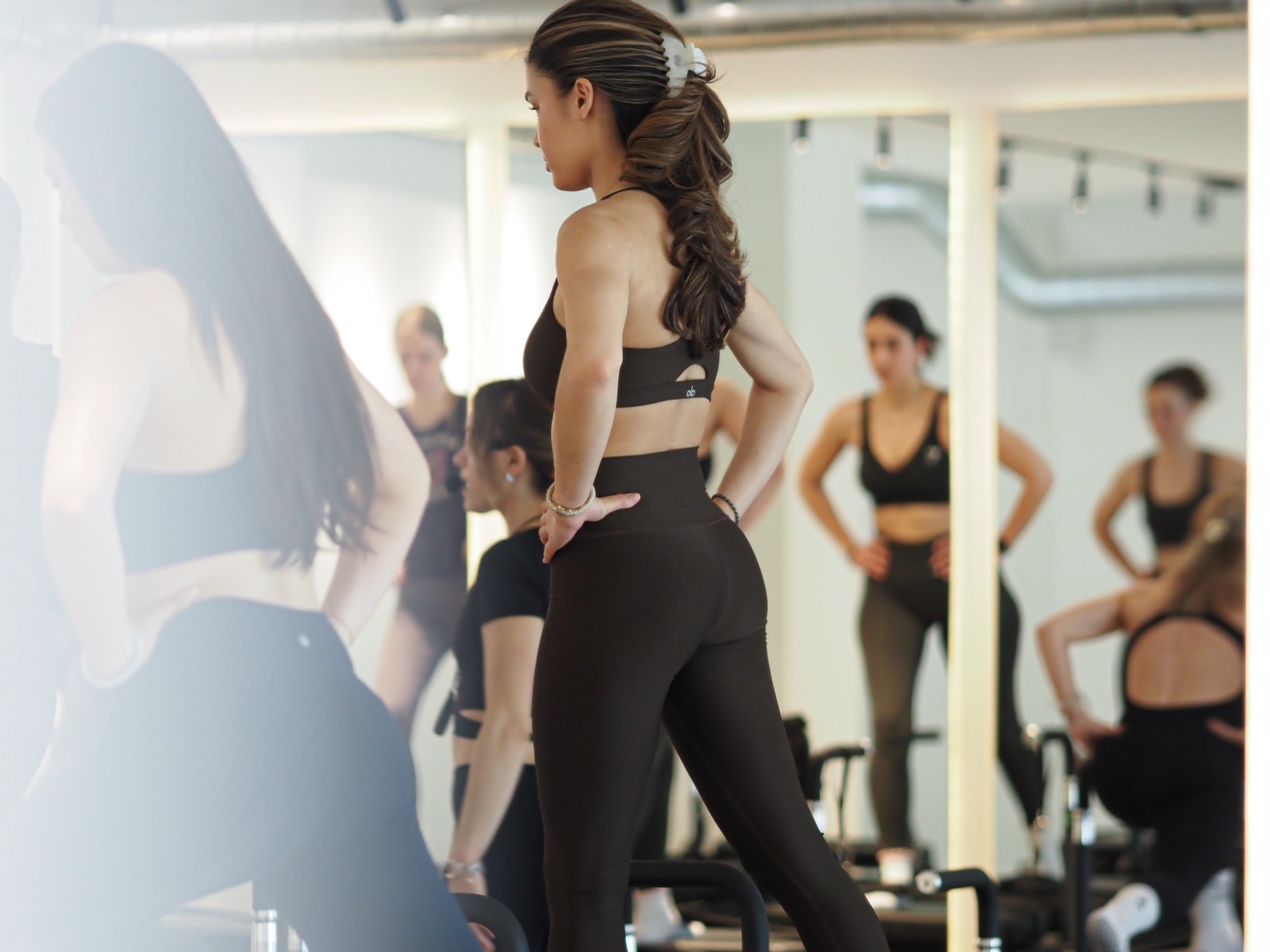
Choose fitted, comfortable activewear that allows you to bend, reach and extend without adjusting your clothing throughout class. Leggings or shorts with a supportive top usually work well. Extremely loose layers can make it harder for both you and your instructor to see your alignment.
Grip socks are essential. They help you feel secure when your feet are on the carriage, platform and footbar. Avoid shoes on the reformer, and leave jewellery or anything that could catch on equipment at home.
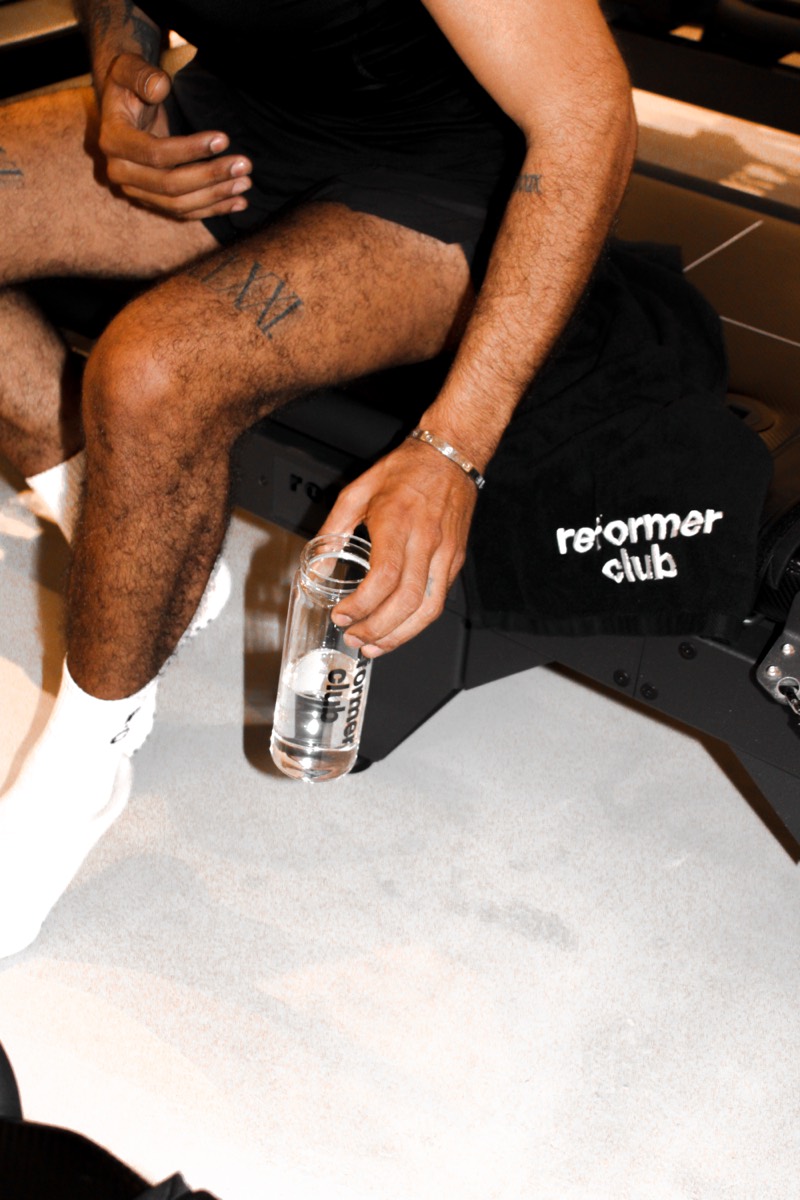
Bring water, but keep the rest simple. You do not need to arrive with a mat, weights or a complicated kit. The focus is on your body, the reformer and the quality of your attention.
What to Tell Your Instructor
A strong first class begins with useful information. Let your instructor know if you are completely new to reformer training, returning to movement after time away, pregnant, managing an injury or experiencing pain. Share any relevant medical guidance you have received.
This is not about being cautious for the sake of it. It allows the instructor to offer options that protect your range of motion while still giving you a meaningful challenge. A smaller movement, lighter spring or different position is not a lesser version of the exercise. At the right moment, it is the intelligent choice.
Be specific about pain. Muscular effort, shaking and heat can be part of a challenging session. Sharp pain, pinching, numbness or joint discomfort are different signals. Pause and speak up rather than trying to push through. Good training builds capacity over time. It does not ask you to ignore your body.
Learn These Reformer Basics First
The reformer may look complex, but your first class does not require you to memorise every part. You will gradually become familiar with the carriage, footbar, straps, springs, shoulder rests and platform. For now, concentrate on the principles behind the setup.
Springs are not simply a measure of difficulty
More resistance is not always harder, and less resistance is not always easier. In some exercises, heavier springs offer stability and support. In others, lighter springs demand more control because the carriage moves more freely.
Your instructor will select and cue spring changes for the sequence. Make each change deliberately, checking that the spring is properly connected before you move on. If you are unsure, ask. There is no benefit in guessing around equipment.
Control comes before range
You may hear cues to keep your ribs connected, lengthen through the spine, soften the shoulders or move from your centre. These are not decorative details. They help distribute effort through the body instead of loading the lower back, neck or hips.
Do not chase the deepest lunge, highest lift or widest extension on day one. Work within a range where you can keep your breath steady and your position clear. Range often grows naturally when control improves.
Slow resistance asks more of you
At Reformer Club, Slow Resistance Training is built around sustained tension, controlled tempo and precise form. You may spend longer in a movement than expected. A small, deliberate pulse can become intense when you remove momentum and stay connected to the working muscles.
This can be surprising if you are used to fast-paced workouts. Resist the urge to speed up when fatigue arrives. Slow down, reduce the range if needed and find the breath. That is often where endurance and mental focus begin to develop.
During Your First Class
Give yourself permission to learn in real time. Your instructor may offer several cues in a single exercise. You will not catch every one immediately, and that is normal. Choose one correction, apply it, then build from there.
Breath is a useful anchor. Rather than holding it during effort, aim for a steady exhale as you press, pull or stabilise. Breathing will not make the exercise effortless, but it can help you avoid bracing through the neck and shoulders.
Expect your body to work in unexpected places. You may feel your glutes during a plank variation, your inner thighs during footwork or deep abdominal engagement in a movement that looks almost still. The reformer challenges balance and coordination as well as strength.
It is also normal for one side to feel less stable than the other. Notice the difference without judging it. Compensating by rushing usually hides the information you need. Moving with control gives you and your instructor a clearer picture of where to build.
After Class: Build a Routine, Not a One-Off Challenge
You may leave your first session feeling energised, pleasantly worked or more aware of muscles you do not usually notice. Delayed soreness can appear over the next day or two, particularly if the controlled tempo is new to you. Gentle walking, hydration and normal daily movement can help.
Avoid treating soreness as the only sign of a successful class. Progress also looks like better balance in standing work, a steadier carriage, more comfortable shoulder positioning and a clearer connection to your core. These changes are easy to miss when you only focus on intensity.
For most beginners, consistency matters more than an aggressive schedule. One or two sessions a week can create a reliable foundation, depending on your current activity level, recovery and goals. If you also run, lift weights or play sport, your ideal frequency may be different. Leave enough space to recover well and return with attention.
Keep a simple note after each class: which movements felt strong, where you lost control and what cue made the biggest difference. It turns your next session into a continuation rather than another first attempt.
Your first reformer class is not a test of whether you belong in the room. Come as you are, take the time to learn the method and let precision lead. With each controlled repetition, you create a stronger, more balanced place to return to.