Reformer Spring Resistance Guide for Better Form
Use this reformer spring resistance guide to choose tension with control, protect your form, and progress through every Pilates workout with confidence.
The springs are not just a setting to get through before class begins. They are the source of feedback in every repetition. This reformer spring resistance guide will help you understand how tension changes a movement, why heavier is not always harder, and how to select resistance that supports precise, controlled training.
At Reformer Club, resistance is used with intention. In Slow Resistance Training, the goal is not to rush through the carriage or chase the strongest spring in the room. It is to create meaningful muscular tension while keeping your posture, breath, and alignment in place.
What reformer springs actually do
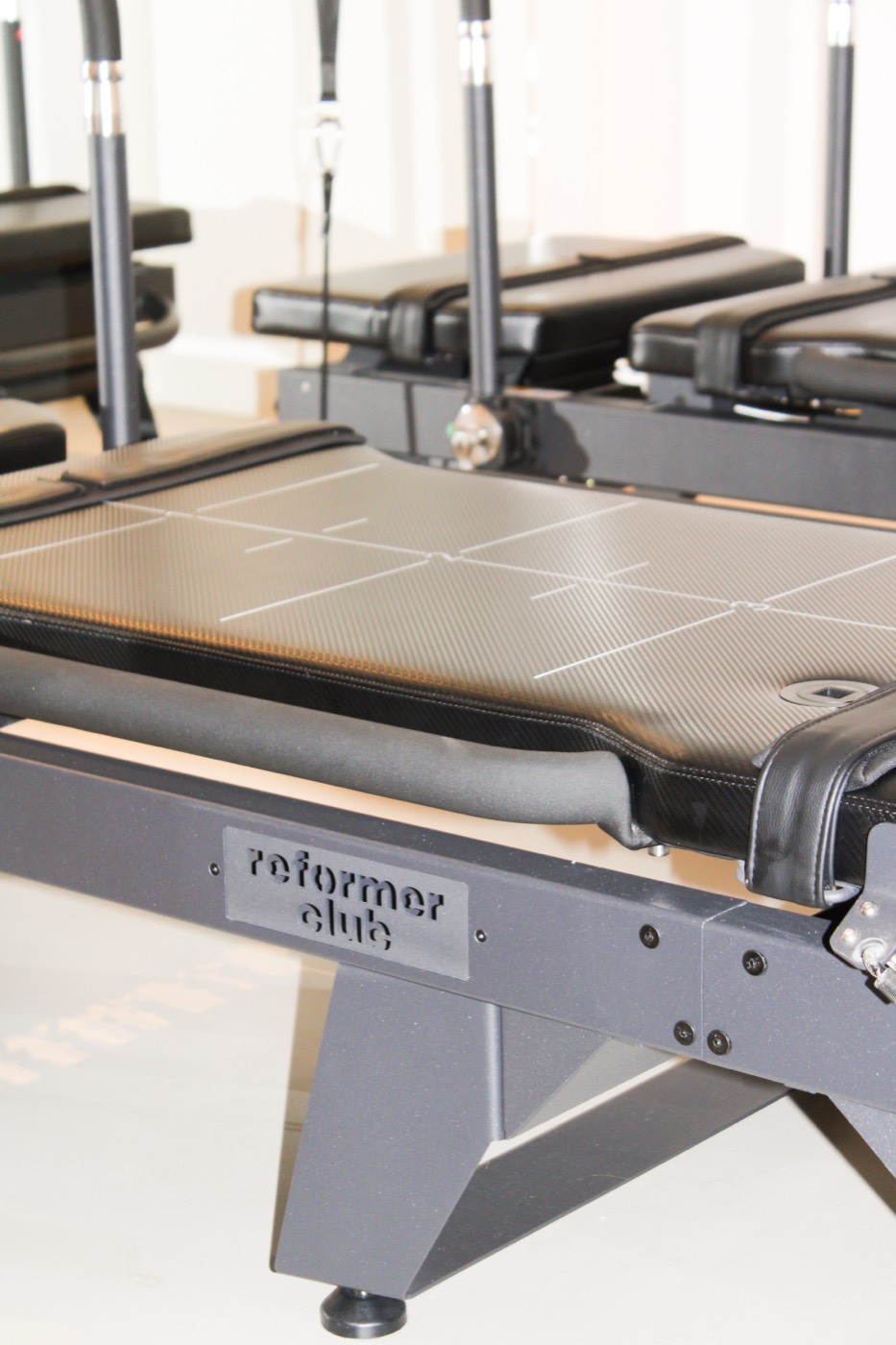
Reformer springs connect the moving carriage to the frame. As you press the carriage away or draw it back in, the springs either lengthen or shorten, creating resistance and assistance depending on the exercise.
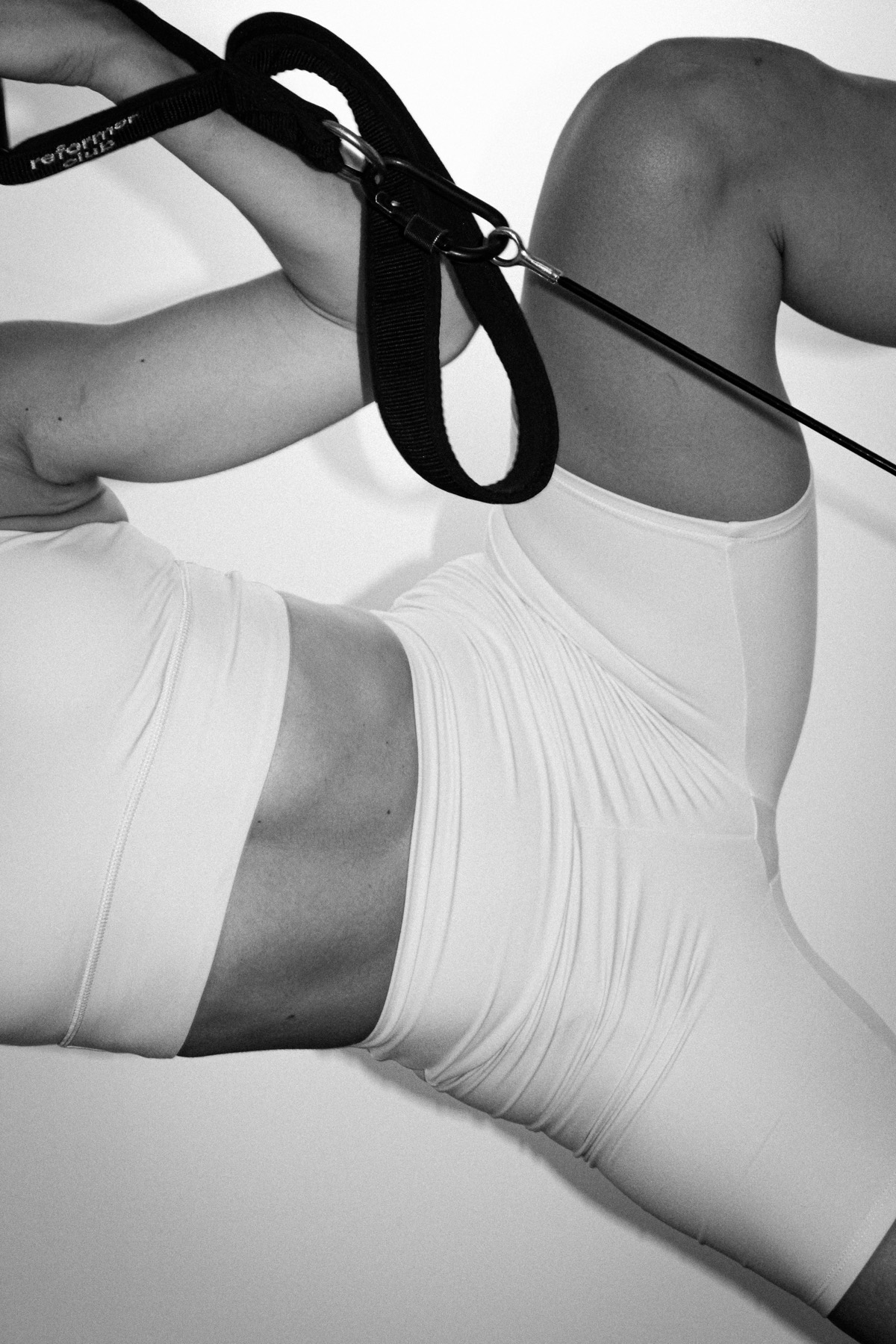
A heavier spring generally asks for more force to move the carriage. That sounds simple, but it does not automatically make every exercise more challenging. In a footwork sequence, more resistance can give the legs a strong, stable load. In an abdominal exercise where you are controlling the carriage from the straps, the same heavier setting may provide useful support. In other positions, it may pull you out of alignment before the intended muscles can work.
This is why spring choice is part of the exercise, not an afterthought. The right load should make you feel connected, challenged, and in control. The wrong load often creates momentum, gripping, or compensation.
Reformer spring resistance guide: heavier versus lighter
Think of spring resistance as a conversation between the carriage and your body. A heavier setting can create more load, but it can also make the carriage more stable. A lighter setting can reduce the force required to push out, while demanding more control because the carriage is less anchored.
For lower-body work such as footwork, squats, and presses, medium to heavier resistance often provides a secure platform to work from. You can press through the feet, organise the pelvis, and build strength through a controlled range. The focus is not simply on moving the carriage far away. It is on returning it with the same control you used to send it out.
For arm work, plank variations, kneeling sequences, and unilateral exercises, lighter springs can be surprisingly intense. Less tension may mean the carriage moves more easily, but it also means your shoulders, trunk, and hips must stabilise more effectively. If your carriage shakes, that is not necessarily a problem. If the movement becomes rushed or your shoulders climb toward your ears, the load may no longer be serving the exercise.
The most useful question is not, “What is the strongest spring I can handle?” Ask instead, “Can I maintain the shape of the movement from the first repetition to the last?”
Why spring colours are not a universal language
Many reformers use coloured springs to indicate relative tension. However, the exact colours and levels vary by equipment brand and studio setup. A red spring in one studio may not feel identical to a red spring somewhere else. Spring age, maintenance, and the number of springs attached also influence the total resistance.
Avoid relying on colour alone, especially when training in a new environment. Your instructor will cue the appropriate setup for the class and exercise. Listen carefully, check that each spring is fully connected, and ask before changing anything if you are unsure.
This matters for safety as much as performance. An unsecured spring or an unsuitable setup can cause the carriage to move unexpectedly. Taking a moment to set up correctly protects your focus and lets you train with confidence.
The right resistance should improve your form
Good resistance makes quality visible. You should be able to feel the intended area working without losing the key positions of the exercise.
During footwork, that may mean your knees track in line with your toes while your pelvis stays neutral and your ribs remain quiet. During straps, it may mean your shoulder blades stay wide and supported rather than pulling forward. During core work, it may mean the carriage moves because your centre initiates the action, not because you have thrown your legs or arms through the range.
If you have to hold your breath, lock your joints, grip through the neck, or use a sharp burst of speed to complete the movement, reduce the load or adjust the range. More resistance is only productive when you can organise it.
There is a trade-off here. A lighter spring is not always the safer option. In a standing or plank-based exercise, too little tension can make the carriage unstable and ask more of your balance than your current control allows. A slightly heavier setting may give you the support needed to find strong alignment. Progress comes from choosing the resistance that matches the purpose of the exercise and your ability to control it.
How resistance changes throughout a class
A well-structured reformer session should not use one spring setting from start to finish. Your body position, contact points, and training goal change, so the resistance should change too.
You may begin with stronger, more grounded lower-body work, then move into lighter settings for mobility and trunk control. Later, a heavier spring might return to support a bridge, a kneeling press, or a deliberate strength sequence. In advanced work, the challenge often comes from combining controlled tension with a smaller base of support, a slower tempo, or a longer time under load.
This is central to Slow Resistance Training. Intensity does not need to come from impact or speed. A precise movement on an appropriate spring, held for one more breath or returned at half the pace, can create deep muscular work without unnecessary joint stress.
Start where your control is strongest
Beginners sometimes assume they should always use the lightest option. Others arrive with gym experience and reach immediately for the heaviest tension. Neither approach accounts for the specific demands of reformer training.
In a START class, the priority is learning the equipment, understanding the carriage, and building a reliable relationship with your alignment. Your instructor may select settings that feel more supportive than expected. That is not making the work easier. It gives you enough stability to learn how to press, pull, resist, and return with awareness.
As you progress into SIGNATURE, you will develop the endurance to sustain form through longer sequences and more complex transitions. In BURN, resistance may become more demanding, but so can the pace, range, unilateral loading, balance requirement, and time under tension. Progress is layered. It is never only about adding springs.
Your strongest training choice is to arrive ready to be coached. Tell your instructor about injuries, pregnancy, recent pain, or anything that affects how you move. A modification or different spring setting is not a step back. It is how you keep the session effective for your body.
Three signs it is time to adjust
You may need more support if the carriage moves before you are ready, you cannot return it smoothly, or your balance disappears before you can find the intended muscle connection. You may need less resistance if your joints feel compressed, your range becomes forced, or you have to recruit momentum to complete the repetition.
The third sign is subtler: the work feels easy because you are no longer controlling it. A carriage that flies home quickly may create movement, but it does not create the same training effect as a slow, deliberate return. In many exercises, the return phase is where control, endurance, and concentration become most visible.
Give yourself permission to adjust. A spring change is not a judgement on fitness. It is a practical decision that keeps your training honest.
Build strength through precision
The best reformer resistance is the setting that lets you work close to your edge without crossing into compensation. It should challenge your muscles, sharpen your focus, and leave you feeling more organised in your body rather than depleted by poor mechanics.
Over time, you will recognise the difference between productive effort and resistance that simply feels heavy. Keep choosing the setting that allows you to move with intention, breathe fully, and finish each repetition with control. That is where strength becomes lasting, balanced, and truly yours.